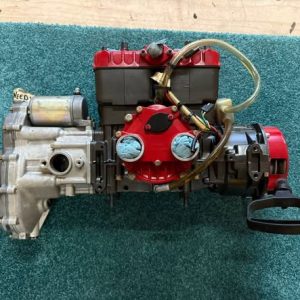
The Rotax 582 “Blue Head” RAVE Engine – Built by Rotax Rick should be selected only after confirming its serial number, builder records, internal configuration, gearbox, operating history, inspection status, and aircraft compatibility.
Whether buyers search for a Rotax 582 Blue Head, Rotax 582 Blue Head RAVE Engine, or Rotax 582 Aircraft Engine, condition and installation suitability should guide the purchase.
The Rotax 582 Two-Stroke Engine, Rotax 582 Ultralight Engine, Rotax 582 Aviation Engine, and Rotax 582 65HP Engine phrases represent closely related searches for lightweight aircraft propulsion.
Accurate descriptions help customers compare engine condition, accessories, installation needs, maintenance records, and commercial value.
These keywords support relevant SEO while preserving responsible guidance for aviation engine selection.
Key Details of the Blue Head Powerplant
The seller should provide detailed photographs of the engine from every side, including the data plate, heads, cylinders, carburetors, gearbox, ignition, exhaust ports, and accessories.
Strong traceability improves the commercial value of the Rotax 582 Blue Head RAVE Engine.
Understanding the Builder’s Role
The phrase built by Rotax Rick should be supported by documentation identifying the builder, build date, work performed, components installed, inspections completed, and any testing conducted.
The engine should be evaluated according to its documented work rather than the reputation of the builder alone.
Inspecting the RAVE Components
The RAVE system uses exhaust-side valve components intended to influence engine breathing across different operating conditions when correctly configured and maintained.
RAVE-system condition should be included in maintenance and pre-purchase records.
Operating a Lightweight Two-Stroke Engine
Its dependable operation depends on correct fuel, lubrication, carburetion, ignition, cooling, exhaust, loading, and maintenance.
Fuel and oil procedures should remain clearly documented for every operator.
Inspecting Radiator and Coolant Components
A freshly painted blue head does not establish the condition of the internal coolant passages or cooling components.
The system should be filled, vented, pressure checked, and monitored through suitable procedures.
Inspecting Cylinders, Pistons, and Crankcase
A clean exterior does not reveal the condition of internal rotating and reciprocating components.
Compression or other condition tests should be interpreted according to the engine’s configuration, temperature, build status, and suitable technical procedures.
Carburetor Synchronization and Mixture
The Rotax 582 commonly uses a dual-carburetor induction arrangement that requires suitable setup, synchronization, jetting, cable adjustment, and fuel delivery.
Carburetor settings should correspond with the engine configuration, intake system, exhaust, altitude, climate, and applicable technical guidance.
Understanding Rotax 582 Ignition Redundancy
The presence of dual ignition does not remove the need for regular testing and maintenance.
Replacement ignition parts should match the exact engine configuration.
Matching Engine Speed to Propeller Speed
Complete engine, gearbox, and propeller evaluation supports a more suitable installation.
The gearbox should be inspected for unusual noise, backlash, leakage, bearing concerns, damaged mounting areas, corrosion, and previous repair.
Maintaining Exhaust Connections and Supports
The exhaust system forms an important part of two-stroke engine operation and should match the intended Rotax 582 configuration.
Mounting should allow suitable support without transferring excessive vibration into the engine or aircraft structure.
Evaluating Installed Engine Weight
The Rotax 582 is frequently considered where compact dimensions and useful power are important to the aircraft design.
The complete conversion should be reviewed through appropriate engineering and maintenance processes.
Rotax 582 Engine Installation Options
The Rotax 582 may be considered for ultralights, experimental aircraft, gyrocopters, trikes, powered parachutes, amphibious projects, and other compatible recreational aircraft.
Every custom component should be designed and installed with appropriate clearances, strength, support, and maintainability.
Operational and Aircraft Eligibility Review
The buyer should review aircraft limitations, maintenance requirements, operating rules, and installation data before purchase.
Operating limitations should reflect the actual aircraft and engine combination.
Engine Hours, Build Time, and Service History
Calendar time and storage conditions can matter even when operating hours are limited.
Organized history supports a more informed Rotax 582 Blue Head purchase.
Testing the Rotax 582 Before Purchase
A controlled engine run can provide useful information about starting, idle quality, throttle response, cooling, ignition operation, fuel delivery, vibration, leakage, and unusual noise.
An unloaded or lightly loaded test may not reveal issues that appear under flight power.
Pre-Purchase Mechanical Testing
A single measurement should not replace a complete review of operating history, internal parts, build records, and run behavior.
Storage can affect seals, bearings, internal surfaces, coolant passages, and fuel-system components even when the engine has not been operated.
Rotax Aviation Engine Condition Checklist
Any uncertainty regarding internal parts, build scope, operating history, or aircraft compatibility should be resolved before shipment.
- Determine whether the radiator, exhaust, carburetors, air filters, starter, gearbox, ignition modules, mounts, instruments, manuals, and build records are included.
- Inspect the engine for corrosion, coolant staining, fuel leakage, oil residue, damaged wiring, cracked hoses, loose fittings, impact marks, missing hardware, and unauthorized modification.
- Retain purchase records, build sheets, photographs, serial information, run-test data, maintenance documents, and shipping records with the aircraft project file.
Shipping and Storing the Rotax 582
The engine should be secured to a suitable shipping base or crate that supports its weight without loading delicate carburetors, fittings, wiring, cooling connections, or exhaust components.
During storage, the engine should remain dry, clean, supported, preserved, and protected from moisture, dust, insects, corrosion, chemicals, and uncontrolled handling.
Mounting the Blue Head RAVE Powerplant
Fuel, cooling, oil, ignition, exhaust, throttle, choke, instruments, starter, and electrical systems should be planned as an integrated package.
The cooling system should be routed and secured to prevent chafing, trapped air, leaks, heat exposure, and contact with moving parts.
Required aircraft records and operating limitations should be updated appropriately.
Routine Rotax 582 Inspection
Repeated adjustment should not replace diagnosis of an underlying engine or installation problem.
The engine click here should receive additional inspection after propeller damage, sudden stoppage, overheating, severe vibration, fuel contamination, coolant loss, or extended storage.
Buying a Specialist-Built Blue Head Engine
Engines with detailed build sheets, photographs, invoices, run videos, and transparent history are easier for serious buyers to evaluate.
Parts support, specialist access, shipping distance, and future maintenance should also influence the purchase decision.
Rotax 582 Aircraft Engine Conclusion
For a properly matched aircraft installation, the engine can provide compact aviation power when professionally inspected, installed, operated, and maintained.
The strongest purchasing decision begins with confirming the exact engine model, serial number, RAVE configuration, builder documentation, internal parts, crankshaft history, operating hours, gearbox ratio, carburetors, ignition, cooling system, exhaust, test results, and included accessories.
Whether aviation builders are sourcing an Ultralight Aircraft Engine, Rotax Aviation Engine, or Light Sport Aircraft Engine, professional inspection and installation should precede operational use.
With verified identity, documented internal components, suitable mechanical condition, professional installation, organized records, and routine maintenance, the engine can provide dependable long-term value.